Thursday, October 28, 2010

My Fave Skirts for the Day


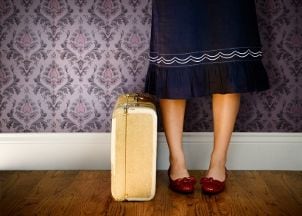
I wanted to keep the same theme going and stay with skirts.  Here is a long skirt that I just thought it was adorable!


Also I just love this teal long skirt. It would would look good with many different colors of shirts. You can dress it up or down.  This long skirt is a must have!

Wednesday, October 27, 2010

Top 5 Women's Skirts

No matter which season it is, you need skirts as versatile wardrobe options you can turn to again and again. But which women's skirts will look best on your figure and work for many different occasions? This guide lists the top 5 women's skirts you should have in your closet for every event you attend.

Best Women's Skirts:

1. A-line skirt. Named for its slight resemblance to a capital A, the A-line skirt is universally flattering because it flares from the waist and camouflages a curvy stomach, legs and hips. Buy an A-line skirt made of cotton or linen for a great summer skirt and a classic plaid flared skirt made of wool or flannel to wear when the weather gets chilly. You're not limited to the traditional A-line shape, either. A high-waisted full skirt that flares slightly to the knees will give you a pretty vintage silhouette, while a flared skirt made of toile or a crisp taffeta is still flattering and offers a dressier look.

2. Long skirt. These skirts range in length and style, but a long skirt is a wardrobe staple because of its versatility. Look for light cotton prairie skirts with ruffled tiers for an easy-to-wear style during spring and summer or buy a long skirt made of lace panels that hits at about mid-calf for a dressier look. When you want a long skirt that's more appropriate for work, especially during cooler weather, look for straight skirts made of suede or wool you can pair with boots and tights.

3. Pencil skirt. For the office or a dressy event, a pencil skirt is a necessity. This style emphasizes the hips and bottom, as it hugs the body snugly from the waist down, and it looks great with a tucked-in button-up or dressy blouse. Buy a pencil skirt made of stretchy black fabric for a comfortable, classic look or add variety to your wardrobe with a brown satin skirt. Bow-tie waistbands and wide bands can add variety to the skirt as well.

4. Denim skirt. When you want a comfortable short skirt you can wear with simple tees and sandals around town, a denim skirt is a great option. Pick a length you are comfortable with, such as a fit that grazes the knees, hits mid-calf or falls a few inches above the knee, and then find a wash and color you like. A denim skirt in a dark indigo wash is especially flattering with heels and a ruffled blouse, while a short skirt made of distressed denim in a light wash is perfect with retro sneakers, a vintage shirt and colorful jewelry for a casual day of shopping.

5. Pleated skirt. If you want a traditional skirt you can wear to work, to church meetings and even to a formal occasion like a wedding, buy a pleated skirt made of linen or satin. For a prep-school look, purchase a full skirt in a plaid pattern with wide pleats that falls to the knees or just above them; add black peep-toe heels and a crisp white button-up for a classic '50s look. A pleated skirt made of silk or delicate chiffon is always lovely with a fitted blouse for a dressy night out.

Buy Skirts

Tuesday, October 26, 2010

FAQs about Children's Clothing


Whether you need new children's clothing for the school year or durable kids' clothes as your sons and daughters continue to grow, you probably have a few concerns about purchasing children's clothes that will fit well and last. Fortunately, this guide provides you with tips on purchasing children's clothing, including baby clothes and toddler clothes, and getting the right fits online. Read on for answers to your frequently asked questions about children's clothes.

Buying Children's Clothing:

1.How can I get the most use out of my child's clothing?
Follow the care instructions on the tag. Most children's clothing should be machine-washable and have no problems in a dryer. Look at descriptions of kids' clothes online for basic care requirements so you know beforehand what you're getting. Make sure you also buy clothing, especially toddler clothes, in colors and patterns your kids will like so that they'll wear them frequently before they outgrow them. When you purchase girls' dresses and other dressy girls' clothing or boys' clothing, look for styles with extendable hems or waistbands so you can adjust the clothes as your children grow older.

2. Are there any types of baby clothes I should avoid to protect my baby?
Newborns have weak necks, so you should avoid pullover newborn clothing or be sure the neck isn't too tight -- snaps along one shoulder are the simplest solution to this problem. Baby clothes with ties and strings should also be avoided, especially as your baby gets older and likes to grab objects. Also, look for newborn clothing with wide necks and front closures so you can easily dress and undress your little one.

3. How can I make sure the clothes I purchase online will fit?
Measure your children before you buy girls' clothing and boys' clothing, and then refer to this children's sizing guide. Also, check out your kids' closets and look at the sizes and styles that fit them well. You'll know which clothes will work best.

Buy Children's Clothing

Who Would Have Thought! I knew there was a reason I have always wanted to go there!


Australian fashion reflects a vibrant, creative nation, rich in colour and fresh, exuberant style. The three main settings of Australian life—the bush, the cities and the beaches—and the country’s principally hot and dry climate have influenced who Australians are and therefore what they wear. Australian fashion labels are now sought after around the world.

Australia’s fashion industry has grown around the relaxed, casual demeanour of the people it designs for, as well as their love of outdoors living. But it also reflects the sophisticated, cosmopolitan and multicultural nature of Australian society. Most Australians are comfortable in T-shirts and foot thongs (flip-flops) one minute and appreciative of innovative high fashion the next. The bold colours of sunny Australian beaches and the starkly contrasting hues of the country’s central desert landscapes are captured in Australia’s fashion palette. And the rigours of the elements in which Australians live have often determined the choice of cloth used by designers. Colour and fabric have contributed greatly to an Australian sense of fashion, in cut and garment types.
Beachwear

Australia has a long history of world-renowned swimwear manufacture. In 1928, Speedo swimwear was launched by Alexander MacRae in Sydney and the brand became world famous after Australians wore it in the 1932 Los Angeles Olympics. Australia now boasts top-of-the-line swim- and surf-wear brands such as Roxy, Billabong, Rip Curl and Seafolly.
In the bush

One-third of Australia’s population live in the country—known as ‘the outback’ and ‘the bush’—in farming and rural communities. Australian companies, such as Driza-Bone, Blundstone, RM Williams, Akubra, Di CROCO and Genuine Australian Bushwear, have developed high-quality fashion to suit this lifestyle and to withstand the harshness of the bush environment.

The Driza-Bone (‘dry as a bone’) coat is to Australians what the Burberry trench coat is to the English: a symbol of heritage, values and culture. The coat is the traditional Australian stockman’s oilskin riding coat. The Akubra hat, too, is an Australian icon, famous for its quality and style developed over 100 years of production.

Such is the iconic status of both the oilskin riding coat and bush hats that the Sydney Olympics 2000 opening ceremony included 120 stock horse riders in this attire, and the ceremony’s 2000-piece marching band also wore the Driza-Bone and Akubra uniform. The Driza-Bone was made the official outfit for the 2007 Asia–Pacific Economic Cooperation (APEC) leaders’ meeting in Sydney and visiting heads of government were also given an Akubra hat.
Urban wear and high fashion

The urban streetwear and haute couture components of Australia’s fashion industry are also thriving. A new generation of streetwear designers takes its inspiration from Australia’s surf culture, graffiti and art and has created its own unique style.

Dynamic new labels include Ksubi, based near Sydney’s Bondi Beach; Sass & Bide, which has a cult following among the younger Hollywood set; and Willow, a lingerie line.

Inspired by an extraordinary range of Australian fashion textiles and cultural influences, many Australian designers have received international attention in recent years. Australian fashion creations, such as those by Wayne Cooper, Carla Zampatti, Easton Pearson, Nicola Finetti, Bettina Liano, Martin Grant, Michelle Jank and Lisa Ho, are in worldwide demand.

Internationally acclaimed Sydney designer Akira Isogawa, whose work is known for its impressive cross-cultural fusion, was honoured with the inaugural Australian Fashion Laureate award in 2007, the industry’s newest and highest honour. The award pays homage to outstanding creative or intellectual achievement in the Australian fashion industry.

Collette Dinnigan was the first Australian to mount a full-scale ready-to-wear parade in Paris (in 1995), at the invitation of France’s Chambre Syndicale du prêt-à-porter des couturiers et créateurs de mode. Dinnigan, a regular on the international circuit since the 1990s, and with high-profile fans including Naomi Watts, Sarah O’Hare, Helena Christensen and Charlize Theron, received the Most Beautiful Exports Award in 2000, 2001 and 2004. She was chosen as Australian ‘Designer of the Year’ in 1996. In March 2005 she was voted ‘Best Australian Designer’ by the readers of In Style magazine. Both Isogawa and Dinnigan regularly show their bold and playful collections at Paris Fashion Week.
Indigenous influence

In the 1980s, Aboriginal and Torres Strait Islander textiles emerged as a key influence on non-Indigenous designers. Darwin’s Tiwi Centre, an arts centre dedicated to the preservation of Indigenous Tiwi arts and crafts, has played a significant role in the commercial application of Indigenous textile designs to Australian high fashion. For the first Tiwi Designs exhibition in Sydney in 1983, six major fashion designers, including Jenny Kee, Linda Jackson, Katie Pye and Robert Burton, selected fabric for the Tiwi people to print, and used the results in their garments. Since then designers such as Collette Dinnigan, Peter Morrissey and Perth’s Rebecca Paterson have made extensive use of Indigenous design in their work. Morrissey, for example, used a design by Aboriginal artist Jacinta Numina Waugh on garments commissioned for the Opening Ceremony of the 2000 Olympic Games.
Hot on the calendar

Melbourne lays claim to being Australia’s fashion capital, hosting the L’Oréal Fashion Festival every March. The festival offers fashion lovers a choice of catwalk shows, parties, product launches, exhibitions and industry events that capture the glamour and creativity of Australian fashion.

Australia also hosts the biannual Rosemount Australian Fashion Week. Previously staged in Melbourne, the event was moved to Sydney’s Circular Quay in 2007. It showcases more than 150 designers’ spring/summer collections in May and their autumn/winter collections in October.

Rosemount Australian Fashion Week is an exclusive, industry-only event, made accessible to registered buyers, agents, media, stylists and other industry representatives. It features ready-to-wear, street wear, swimwear, men’s and women’s apparel, intimate apparel, footwear and children’s wear. A selection of Australia’s and the Asia–Pacific’s best designers present their collections to some of the world’s most significant buyers, media and industry influencers.
An international success story

Australian designers are now influencing what others around the world will wear. Major fashion capitals, such as London, are actively seeking out creative Australian designs. The success of Australia’s innovative fashion is continuing to translate into a higher demand from international audiences. Australian designs are exported to many countries, with the most popular international markets being France, Japan, the United Kingdom, the United States, Dubai and Kuwait.

As fashion has become such a successful export market for Australia, commensurate growth has occurred in employment opportunities in the fashion manufacturing industry and other fashion-oriented careers such as fashion journalism, fashion styling, make-up and hair styling, fashion photography and modelling. Tertiary education institutions have developed high quality fashion and textile courses to ensure the industry is serviced with well-trained staff.

Australia has developed an international reputation for producing some of the emerging stars of the fashion world, from designers to models. Supermodels such as Elle McPherson (now with her own high-end lingerie line), Miranda Kerr, Gemma Ward and Megan Gale have reinforced Australia’s image as a modern, fun and fresh culture.

Note: Unless otherwise stated, all dollar amounts are in Australian dollars.
Key facts

* More than 2000 companies export fashion from Australia.
* Australia’s top designers are inspired by an extraordinary range of Australian fashion textiles and cultural influences.
* One of the strongest influences has come from Indigenous art and textiles.
* Australian designers who have received international acclaim include Akira Isogawa, Collette Dinnigan, Sass & Bide and Jenny Kee.
* Fashion in Australia is a $14 billion industry.

This content is provided by About Australia

Monday, October 25, 2010

My Faves for the Day: Children's Clothing


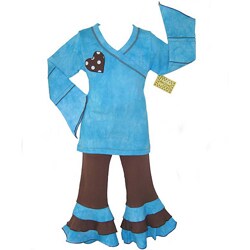
I wanted to share a few items that I really thought were pretty cute for children's clothing This outfit for girls is adorable and I wanted to share it you. You can find so many cute outfits or girls clothing out there. 


Now I can't play favorites so I will share with you an outfit  that I think is a good looking shirt for boys.  I did not want to say adorable for the boys  just might start blushing.  This is  the "in" look which is the skater look. Many boys would like to have this shirt! Boys clothing has come such a long way from when my boys were little tots.

Friday, October 22, 2010

Tips on Buying Men's Shirts

Whether you're looking for stylish men's dress shirts for the office or men's polo shirts for a casual weekend with friends, you need shirts that fit you well and also fit your personal style. Read on for tips on buying men's shirts for every occasion.

Buying Men's Shirts:

1. Buy polo shirts for casual wear. While they are traditionally worn for golf and tennis, men's polo shirts are comfortable and versatile enough to wear with jeans or shorts for attending a sporting event, hanging out at home or going out to dinner with family. For a good fit, buy shirts that are loose enough in the sleeves and chest area so you can stretch and breathe easily. Striped polos are traditional and will give you a sporty look, but solid polos are also classic men's casual shirts and look great paired with a comfortable hoodie or blazer for extra warmth. Find men's shirts in flattering colors, such as navy blue, red and hunter green, for shirts that go well with everything.

2. Stock up on quality dress shirts for work. If shirt-and-tie is the required dress for your office, a good collection of men's dress shirts is important. Since you'll be wearing men's white shirts most of the week for at least eight hours a day, purchase shirts that fit loosely in the neck area, armpits, chest and wrists. Make sure you can comfortably wear a tie and suit jacket over men's white shirts and look for colored and striped styles to dress up a bland wardrobe. For extra comfort at work, look for men's cotton shirts with stiff collars and cuffs. Wrinkle-resistant men's cotton shirts are also a good bet for the office.


3. Purchase T-shirts for everyday wear. White and solid-colored men's T-shirts are perfect for lounging at home, working outside or going to a game or concert with friends. Find fitted men's T-shirts you can layer beneath button-ups or sweaters for a crisp look. Look for looser men's casual shirts you can pair with jeans, twill pants and sneakers. Men's short-sleeve shirts are also great for layering under blazers or hoodies for chilly days or nights. Look for vintage men's short-sleeve shirts with your favorite band on them to pair with classic jeans and an athletic jacket for a laid-back look.

Buy Men's Shirts

Thursday, October 21, 2010

Best Women's Boot Styles for Evening


You've probably heard the phrase, "If the boot fits, wear it." But with so many styles of women's boots available, shopping for them can get a little frustrating. Whether the women's boots are for a night on the town with friends, a work-related gathering or just something to show off during dinner with the family, these choices are sure to add elegance and variety to your wardrobe.

Best Women's Boots

1. Stiletto boots. Well-known for the sexy, skinny heel, stiletto boots are a great way to dress up a skirt and add attractive length to your legs. Stiletto boots are available in either a rounded or pointed toe, and they come in a variety of materials. Slouchy stilettos are another option that works well for the evening, especially paired with a pencil skirt. Black boots are classic, but brown boots also work well for fall or with warmer outfits.

2. Ankle boots. Ankle boots can be fun and chic, and they are best when paired with long jeans and a dressy top because of their shorter length or with a short skirt. The newest trend in ankle boots is added zippers and buckles. These embellishments will make you stand out. Use them to showcase your individuality.

3. Cut-out booties. These boots are similar to ankle boots in height but feature straps, cut-out circles or laces as well as a peep-toe design. Pair cut-out booties with either fitted boot-cut or skinny jeans and a fancy top or vest for a pretty evening look.

4. Knee-high boots. These versatile boots can be worn with a dress, skirt and even over or under your favorite jeans. Knee-high boots come in lots of different colors and materials, including leather. Slouchy knee-high boots also look great with skinny jeans tucked into them, especially suede boots. The style of this type of boot is already playful, so why not take advantage of it and go with a bold color?

5. Wedge boots. Wedge boots offer a bit of height without the lack of comfort that sometimes comes with stilettos. The boots come in many colors and materials, including leather and suede, and adornments, such as studs and buckles, add interest. Try pairing wedge boots with skinny jeans or a long bohemian skirt.

6. Riding boots. These boots were made for walking, not just riding, with their flat soles and wider legs. You can find riding boots in glossy vinyl, leather and soft suede, depending on your style. Riding boots look best with skinny jeans or long skirts, but a coordinating knee-length skirt or knit dress would also look nice for the evening.

Buy Women's Boots